
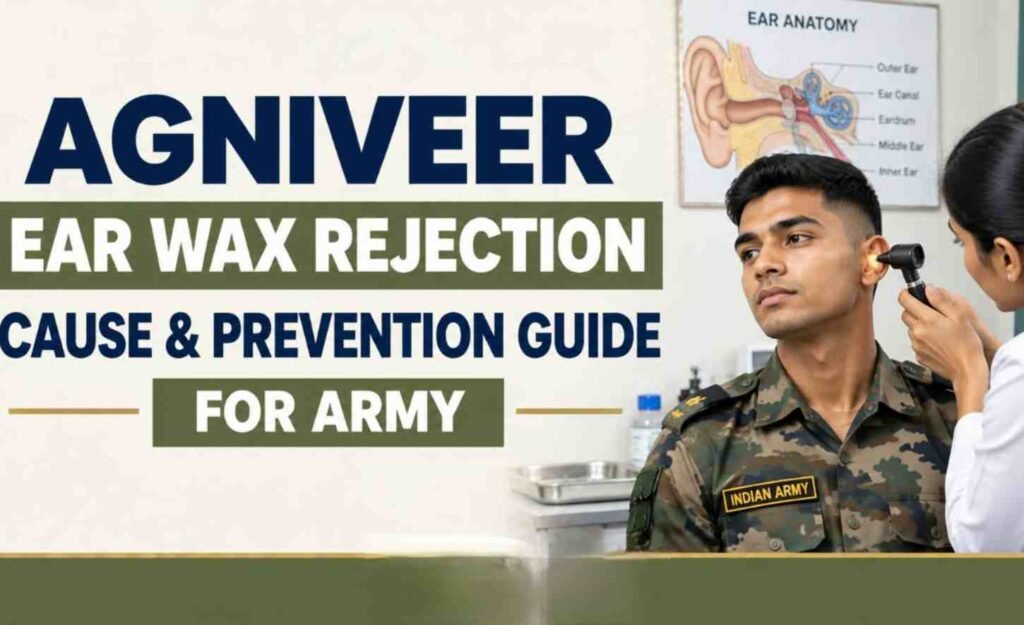
Many Agniveer candidates are surprised to find out that even something as simple as extra ear wax can become a concern during an Army medical examination. Candidates often start to panic when they hear rumours that ear wax leads to instant rejection, but the truth is that ear wax is a completely natural substance that your body makes to protect your ear canal, so it is not automatically a disease or a permanent disability.
The real problem only comes up when ear wax builds up too much or gets packed in tightly, because this kind of blocked wax can seal off the ear canal completely, which makes it hard for medical officers to check the eardrum, and it can also reduce your hearing for a while during testing. So candidates should not panic or assume that simply having ear wax will end their chances of joining the military.
This guide explains what ear wax actually is, why too much of it can affect your medical exam, how Army doctors check your ears, and the safe ways to prevent this problem, and we will also cover the common mistakes you should avoid before your test. In the end, all decisions about medical fitness depend on the official standards of the Armed Forces and the judgement of the authorised medical boards.
What Is Ear Wax?
Ear wax, which doctors call cerumen, is a natural substance made by glands inside your ear canal, and it plays an important role in keeping your ears healthy.
- Traps Dust and Dirt: Ear wax stops tiny bits of dirt, sand, and dust from reaching your delicate eardrum.
- Prevents Infections: It has natural antibacterial properties that protect the inner canal from harmful germs.
- Moisturizes the Skin: It keeps the skin inside your ear from becoming dry, itchy, and irritated.
- Self-Cleaning Mechanism: Normal ear wax slowly moves outward toward the opening of the ear on its own, through everyday jaw movements like chewing and talking.
Having a normal amount of ear wax is completely healthy, and it only becomes something to worry about when it builds up and forms a solid block.
Can Ear Wax Cause Agniveer Medical Rejection?
Normal ear wax does not cause permanent rejection from the Indian Army, but excessive or blocked wax can lead to a temporary unfit status during the rally medical examination.
When ear wax completely blocks the ear canal, military medical officers cannot see the eardrum, which is called the tympanic membrane, and Army medical rules require the eardrum to be clearly visible so that doctors can check for holes, fluid, or infection, which means if the doctor cannot see the eardrum, they cannot certify you as medically fit.
If you are declared temporarily unfit because of a wax blockage, you are usually given a certain amount of time to get the wax safely removed by a qualified specialist, and once the wax is cleared and your eardrum is checked and found to be healthy, this temporary unfitness can be cleared.
Why Can Excessive Ear Wax Become a Problem?
Wax that has built up creates real, practical problems during military medical checks, and here are the main issues linked to wax buildup:
- Blocked Ear Canal: Hardened wax plugs the narrow passage, so light and medical instruments cannot pass through properly.
- Obscured Eardrum: Doctors cannot check whether your eardrum is intact, healthy, and free from any past injury.
- Temporary Hearing Reduction: Heavy wax blockage muffles the sound reaching your ear, which can lead to poor results in whisper or hearing tests.
- Ear Fullness and Discomfort: Blocked wax can create a heavy, stuffed feeling inside the ear, or cause mild ringing sounds.
- Risk of Canal Irritation: Hardened wax can press against the sensitive walls of the canal, causing mild swelling or discomfort.
How Is Ear Wax Checked During the Army Medical Examination?
The Agniveer ENT medical test focuses on making sure that your hearing is sharp and the structure of your ear is completely healthy.
- Visual Inspection: The medical officer uses an instrument called an otoscope, which is a lighted magnifying device, to look directly inside your ear canal.
- Eardrum Verification: The doctor checks whether the eardrum is clearly visible, smooth, and free of any holes or scars.
- Hearing Assessment: Candidates go through standard hearing tests, such as listening to a forced whisper from a set distance, or a standard audiometry test if it is needed.
- ENT Referral: If the canal is heavily blocked by wax, the candidate is sent for wax removal before a final decision is made.
Ear Wax vs Hearing Loss — What Is the Difference?
| Ear Wax Problem | Possible Concern | What the Candidate Should Do |
| Normal Ear Wax | None; protects the ear canal. | Leave it alone; do not insert sharp objects. |
| Impacted Wax Blockage | Temporary muffled hearing and hidden eardrum. | Visit a qualified ENT doctor for safe removal. |
| Permanent Hearing Loss | Structural or nerve damage affecting hearing. | Follow official medical board guidance and testing. |
Can Ear Wax Be Removed Before the Medical Examination?
Yes, but it needs to be done safely by a professional, because trying to clear the wax yourself just before a medical rally can lead to injuries in the canal or to ear infections.
- Consult an ENT Specialist: Visit a qualified ear doctor at a clinic or a government hospital at least two to three weeks before your medical test.
- Safe Syringing or Suction: Doctors use sterile water irrigation or gentle microsuction to clear out hard wax safely.
- Use Prescribed Drops: If the wax has become hard, doctors may suggest ear drops that soften it for a few days before it is removed.
- Avoid Self-Cleaning: Never use keys, safety pins, hairpins, or wooden sticks to dig inside your ear.
How to Prevent Excessive Ear Wax Problems
Preventing wax buildup mainly comes down to following gentle and correct ear care habits over time.
- Stop Deep Cleaning: Your ear canals clean themselves naturally, so avoid digging deep inside them.
- Protect Ears from Dust: Use clean cotton balls or noise plugs if you are working in very dusty training environments.
- Keep Ears Dry: After swimming or bathing, gently dry the outer ear with a clean towel.
- Avoid Frequent Foreign Objects: Do not use dirty earphones or cheap earplugs, since these can push dirt into the canal.
- Schedule Early Checkups: If you naturally make a lot of ear wax, get your ears checked well ahead of your recruitment date.
Common Mistakes Agniveer Candidates Make
Many candidates end up turning a simple issue into a bigger, temporary medical rejection just because of a few wrong habits.
- Using Cotton Buds Aggressively: Cotton swabs actually push wax deeper into the canal, packing it tightly against the eardrum.
- Trying Unsafe Home Remedies: Pouring hot oil, hydrogen peroxide, or candle wax into the ear can cause serious burns or even tear the eardrum.
- Waiting Until the Last Day: Cleaning your ears just a day before the exam can leave the canal red and inflamed, which can raise medical concerns.
- Ignoring Early Hearing Changes: Ignoring a feeling of fullness in your ear until the day of the test only leads to unnecessary stress later.
- Relying on Unverified Online Tips: Following tricks from social media often leads to scratches in the canal and dangerous infections.
Should You Clean Your Ears Before the Army Medical Test?
You should make sure your ear canals are clean and clear, but how you do it matters a great deal, since cleaning your ears does not mean poking objects into the ear canal.
Cleaning your ears too roughly right before your test can irritate the delicate lining of your ear, causing redness, swelling, or minor bleeding, and medical officers can mistake this irritation for an active infection, which can lead to temporary unfitness. So if you think you have too much wax, visit an ENT specialist weeks before the exam, so that your ears have enough time to heal properly after a professional cleaning.
What Should You Do Before the Agniveer Medical Examination?
- Check Your Ears Early: Get your ears inspected by a certified doctor 3 to 4 weeks before your medical rally.
- Follow Medical Advice: If ear drops or irrigation are prescribed, complete the full process exactly as directed by the doctor.
- Keep Ears Clean and Dry: Avoid putting dirty fingers or unsterilised objects into your ears.
- Maintain Medical Records: Keep any treatment slips from your ENT visit safe, in case you need to show them during a review.
- Stay Calm: Remember that wax is an easily fixable issue, and not a permanent reason for disqualification.
Common Myths
- Myth 1: Any amount of ear wax means permanent Army rejection. Fact: Normal wax is healthy, and only severe blockages that hide the eardrum lead to temporary unfitness.
- Myth 2: Cotton buds are the safest tool for ear wax removal. Fact: Cotton buds actually push wax deeper in and can even puncture the eardrum.
- Myth 3: Ear wax removal guarantees final selection. Fact: Wax removal only lets doctors inspect your ear properly; you still need to meet all the other hearing and ENT standards.
- Myth 4: You can hide ear blockage during the test. Fact: Medical officers use bright otoscopes and will spot any blockage right away.
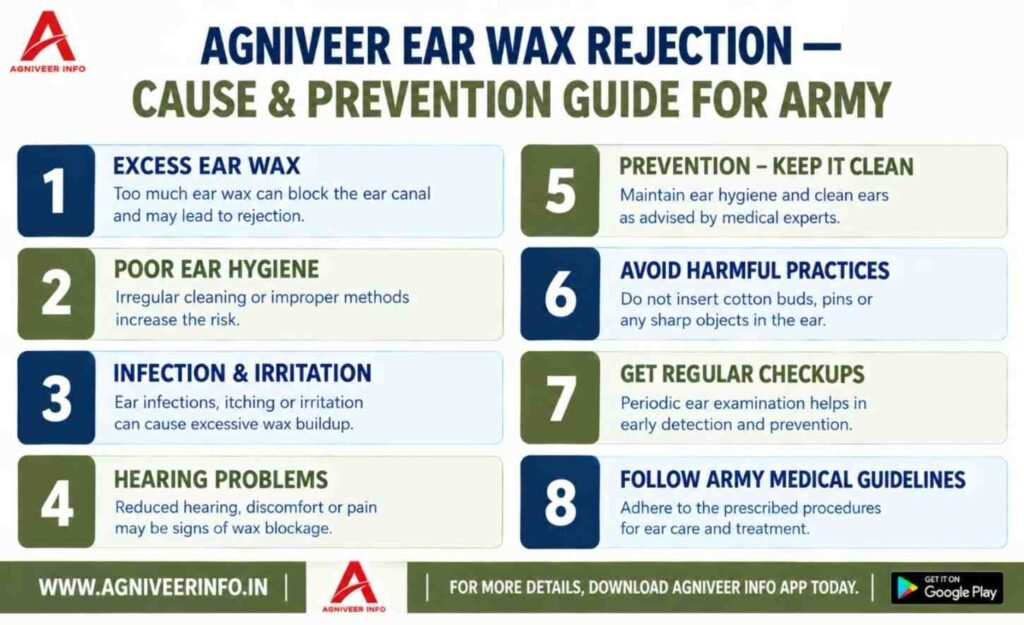
Conclusion
Ear wax is a natural, protective substance made by the body, and not a medical defect. Even so, too much wax or a blocked canal can hide the eardrum and muffle hearing for a while, which can come in the way of official recruitment standards. Candidates should avoid panicking, trying to diagnose themselves, or using dangerous objects to clean their ears, and should instead seek help from an ENT doctor well before their rally date, so their ear canals stay clear and healthy.
By taking these early, safe steps and following the official guidelines of the Armed Forces, you can get through your ear examination comfortably, without any unnecessary stress or delay.
Get the latest Agniveer updates by joining our WhatsApp channel
Frequently Asked Questions
Q1. Can ear wax cause Agniveer medical rejection?
A1. Ear wax itself does not cause permanent rejection, but heavy wax that completely blocks the eardrum or reduces hearing can lead to temporary unfitness until it is cleared by a qualified doctor.
Q2. Does impacted ear wax affect hearing?
A2. Yes, impacted ear wax can temporarily muffle the sound reaching your eardrum, which can reduce your hearing score during military medical examinations until the wax plug is professionally removed.
Q3. Can ear wax cause temporary hearing loss?
A3. Yes, severe wax buildup can cause a temporary drop in hearing, but once the wax is safely removed by an ENT specialist, your normal hearing ability comes back fully and immediately.
Q4. How is ear wax checked during the Army medical examination?
A4. Medical officers examine your ear canal using a lighted instrument called an otoscope, and they check that the canal is clear, the eardrum is visible, and there is no infection or hole present.
Q5. Should I clean my ears before the Agniveer medical test?
A5. Yes, but get it checked by an ENT specialist a few weeks in advance, and avoid aggressive self-cleaning with cotton buds or sharp objects right before the exam date.
Q6. Can cotton buds remove ear wax safely?
A6. No, cotton buds push wax deeper into the ear canal and can scratch the sensitive skin or damage the delicate eardrum, which actually makes the blockage worse.
Q7. What should I do if I have excessive ear wax before the medical exam?
A7. Visit a qualified ENT specialist 2 to 3 weeks before your exam, and follow their professional advice for safe ear drops, irrigation, or gentle suction.
Q8. What happens if I am declared medically unfit because of an ear problem?
A8. If you are declared temporarily unfit because of wax, you will be given an official appeal or review slip with a set timeframe to get treated and appear before a review board.
READ ALSO: AGNIVEER EDUCATION QUALIFICATION — TRADE-WISE REQUIREMENTS