Getting ready for the Agniveer recruitment needs a lot of physical strength, stamina and staying power. Candidates go through hard physical tests, such as long-distance running, push-ups, chin-ups and agility drills, and to keep up with this heavy training, the body needs enough good food.
But many candidates believe that being in top physical shape needs expensive fitness products, imported foods or protein powders from shops, which is a common wrong idea. A well-planned Agniveer preparation diet that is made from traditional and cheap Indian foods can easily give you all the energy, protein, carbohydrates, healthy fats, vitamins and minerals that you need.
When you run every day and follow a heavy workout routine, your body burns a lot of calories. So the quality of your food and eating well every single day matter much more than buying costly fitness supplements. Carbohydrates give power to your running, protein repairs the muscles, and healthy fats help the whole body to work well.
Every candidate has a different body weight, age, metabolism and training level, which means the basic need for calories and protein is naturally different for each person. If you go on an extreme diet or cut your calories badly before the physical tests, you can lose muscle, feel very tired and get injured. Your food must support your training and your recovery, and not work against them.
WHAT SHOULD AN AGNIVEER DIET ACTUALLY PROVIDE?
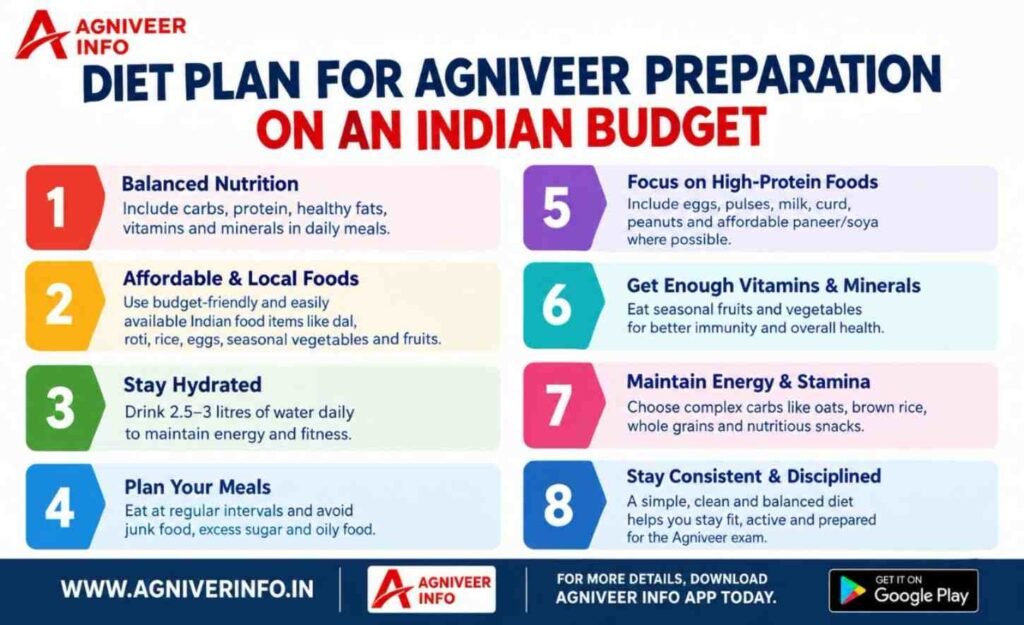
A complete Agniveer fitness diet must give you balanced energy so that you can keep up your physical performance. Carbohydrates are the main fuel for fast running and stamina drills, and if you eat enough of them, your muscles do not break down and you do not get tired too early in the morning practice.
Protein is very important for repairing the body and for the recovery of muscles. Regular running and strength exercises make tiny tears in the muscle fibres, and protein is needed to heal them and make them stronger. Healthy fats give long-lasting energy, protect the organs inside the body and help the body to make hormones. Carbohydrates, protein and fats together are the base of a diet that is built for performance.
Vitamins and minerals from seasonal fruits and vegetables make your immunity stronger and help the body in its daily work. Fibre keeps the stomach healthy, so that you do not feel discomfort during training. Water and salts (electrolytes) keep the body hydrated and stop muscle cramps. If you remove a whole group of nutrients from your diet without a good reason, your energy can go down and your performance can suffer.
AFFORDABLE INDIAN FOODS FOR AGNIVEER PREPARATION
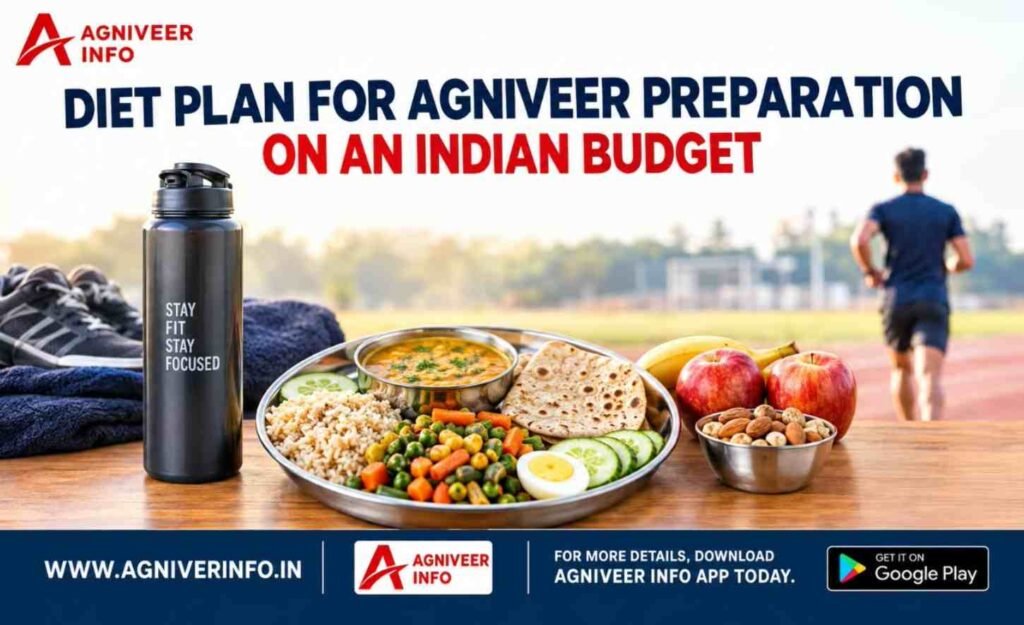
Candidates can build a good diet for Agniveer physical preparation from the everyday Indian kitchen foods that are easily found near them. The need for carbohydrates can be met easily with rice, wheat roti, potatoes, bananas and poha. Oats can also be added if they fit the candidate’s budget. These basic foods give steady energy for daily running and conditioning.
For protein and other important nutrients, the cheap Indian sources are whole dal, black chana, rajma, soybean, eggs, milk and fresh curd. Eggs and soy products are an especially cheap source of protein for candidates who have to watch their money. Roasted chickpeas and peanuts give a mix of healthy fats, protein and long-lasting energy.
Seasonal fruits like bananas, oranges and apples, along with green leafy vegetables, give important antioxidants and minerals. Bananas are a very useful and cheap source of energy for the time just before a workout. If you use these simple things, you can fully meet your food needs without spending too much.
BUDGET-FRIENDLY DAILY MEAL STRUCTURE
If you plan your meals well, you get a steady supply of energy through the heavy days of physical preparation. Candidates should try to follow a daily pattern that has a main breakfast, a light snack in the mid-morning, lunch, food before the workout, food after the workout, and dinner. The timing of the meals can be changed depending on whether you train early in the morning or late in the evening.
Breakfast should bring back your energy after the night without food and get the body ready for the day. A snack in the mid-morning keeps the sugar level in the blood steady. Lunch should give a good balance of complex carbohydrates, protein and vegetables, so that the body recovers in the middle of the day and keeps working well.
The meal before the workout should have carbohydrates that are easy to digest, and it should be eaten a short time before the exercise. The food after the workout should give a balance of carbohydrates and protein to start the repair of the muscles. Dinner gives the nutrients that are needed for recovery during the night. Keep the schedule flexible and realistic, and fit it to your own daily routine.
SAMPLE INDIAN BUDGET DIET PLAN
This sample menu shows how easily available foods can be put together to make one working day of eating for defence preparation.
- Breakfast: Two to three boiled eggs or a bowl of cooked sprouts/chana, along with two whole-wheat rotis or a plate of poha, and one banana.
- Lunch: A normal plate of rice or roti, with a big bowl of dal or rajma, cooked seasonal green vegetables, and a serving of fresh curd.
- Pre-Workout: One or two bananas, or a slice of bread, or a small portion of roasted chana, eaten 45 to 60 minutes before training.
- Post-Workout: A glass of milk, or two boiled eggs, or a serving of curd along with a quick source of carbohydrates like a banana or cooked rice.
- Dinner: Two to three wheat rotis or rice, along with dal, paneer, soybean or eggs, and a mixed vegetable curry.
This meal plan is flexible, and you can change it as per the food of your region, what is available in the season and your own appetite.
HOW TO BUILD A HIGH-PROTEIN DIET ON A LOW BUDGET
It is quite possible to meet your protein needs even on a tight budget, if you combine foods in a smart way. Plant protein sources like dal with rice or dal with roti give all the building blocks of protein (amino acids) when they are eaten together. Beans and pulses such as black chana, chickpeas, rajma and soybeans have high food value at a low cost.
Eggs are widely seen as one of the cheapest and best sources of protein. Milk, curd and peanuts also add to your daily protein in an easy way. It is better to spread your protein over all the main meals than to eat one very large protein meal late in the day, because this helps digestion and helps the body to build muscle. You do not really need costly protein powders when you arrange your whole foods well.
PRE-WORKOUT AND POST-WORKOUT NUTRITION
If you eat carbohydrates that are easy to digest before physical training, the energy stores of your body are full, and this gives you the energy that you need for hard running. You should avoid heavy, oily or very spicy food just before running, because it can cause stomach cramps and slow digestion.
After a hard workout, the body needs protein to rebuild the muscles and carbohydrates to fill up the energy that has been used. If you eat a mix of protein and carbohydrates within a reasonable time after the workout, your body recovers well. The size of your meals and the exact timing should always be adjusted according to what feels comfortable to you and what your stomach can handle.
HYDRATION DURING AGNIVEER PREPARATION
Proper hydration is very important for keeping up your performance, for the health of your heart and blood flow, and for controlling your body heat during Agniveer training. Candidates should drink water regularly through the whole day, and they should drink more or less depending on the heat, the humidity and how much they sweat. When you sweat heavily during long runs, you lose important fluids, and these must be replaced quickly.
If the body lacks water, you get tired early, feel dizzy, lose stamina and get painful muscle cramps. Keeping yourself away from water on purpose to bring down your weight for a short time before the physical measurements is dangerous, and it also harms your physical ability. Candidates should drink according to their natural thirst, keep a steady flow of fluids, and replace the fluids that they have lost after heavy training.
FOODS TO LIMIT DURING PREPARATION
- Sugary fizzy drinks and packed artificial juices.
- Fried street foods, deep-fried snacks and very oily dishes that are eaten often.
- Packed snacks that are highly processed and give very little real nutrition.
- Very heavy and greasy meals that are eaten right before running sessions.
- Sugary sweets that make the sugar in the blood shoot up and then cause a crash in energy.
DO AGNIVEER CANDIDATES NEED SUPPLEMENTS?
Supplements are not a must for building physical fitness or for passing the physical tests of defence recruitment. Whole and natural foods give better overall nutrition, including fibre and other helpful things that supplements do not have. If you depend on protein powders from shops or imported fitness products, it often puts money stress on you without giving you any special physical benefit over real food.
Candidates should use balanced meals with eggs, dairy, pulses and grains as their base. If there is a lack of some vitamin or mineral, it should be found out and handled under the watch of a qualified doctor, and not by taking medicines on your own without guidance. Drugs that boost performance and steroids are illegal, very dangerous and strictly not allowed.
BUDGET-SAVING TIPS FOR INDIAN CANDIDATES
- Buy fruits and vegetables that are in season and grown near you, and not costly imported ones.
- Buy whole grains, pulses, chana and peanuts in large amounts to bring down your overall grocery cost.
- Cook bigger batches of whole beans and dals at home, so that you save both cooking fuel and time.
- Give first preference to cheap protein sources like eggs, soybeans and black chana over packed fitness foods.
- Carry homemade snacks for before the workout, like bananas or roasted gram, instead of buying energy bars from the shop.
| Meal | Budget-Friendly Foods | Main Nutrition Role | Practical Tip |
| Breakfast | Eggs, poha, rotis, chana, banana | Sustained morning energy and protein | Eat an hour before major morning activity. |
| Lunch | Roti, rice, dal, seasonal vegetables, curd | Recharges glycogen and aids mid-day recovery | Combine grains and lentils for complete protein. |
| Pre-Workout | Bananas, poha, boiled potatoes, roasted chana | Quick-digesting energy for intense running | Consume 45 minutes prior to physical training. |
| Dinner | Wheat rotis, soybean, dal, mixed vegetables | Night-time muscle repair and recovery | Keep oil light to facilitate overnight digestion. |
CONCLUSION
A cheap diet for Agniveer preparation can easily give you all the nutrition that you need to build stamina, strength and staying power for the physical selection tests. If you give priority to whole Indian foods like lentils, eggs, local grains, seasonal produce and dairy, you can build a good diet without buying costly supplements.
Keeping the quality of your meals good, drinking enough water and sleeping well matter far more than buying costly special products. Your food must always be fitted to the physical demands on your own body, and it should support your training without extreme cuts in calories. A well-planned diet makes your body ready in the best way, but your final selection depends in the end on disciplined training and steady effort.
For daily update join our WhatsApp channel
FREQUENTLY ASKED QUESTIONS
Q1. What should an Agniveer candidate eat before running?
A1. Candidates should eat carbohydrates that are easy to digest, like a banana, poha or roasted chana, about 45 minutes before running, so that they get quick and useful energy for training.
Q2. Can an Agniveer diet be affordable on an Indian budget?
A2. Yes, an Agniveer diet can be very cheap if you focus on low-cost Indian foods like wheat, rice, dal, chana, eggs, milk and seasonal fruits.
Q3. Are eggs necessary for Agniveer physical preparation?
A3. Eggs are not a must, but they are a cheap source of protein. Vegetarian candidates can use soybean, paneer, milk, curd and sprouts as good replacements.
Q4. How important is protein during Agniveer training?
A4. Protein is very important during training, because it repairs the tiny damage to the muscles that is caused by running and strength exercises, and this helps the body to recover faster and the muscles to become stronger.
Q5. Should candidates use protein supplements?
A5. Protein supplements are not needed. Whole foods like eggs, lentils, soy and dairy give all the protein that you need, without the extra cost of powders.
Q6. What should candidates eat after physical training?
A6. After training, candidates should combine carbohydrates and protein, such as milk with a banana, or eggs with roti, so that the muscles are rebuilt and the energy is brought back.
Q7. How much water should an Agniveer candidate drink?
A7. Candidates should drink water according to their thirst and the sweat they lose, and drink more in hot weather or in hard training, so that the body stays hydrated and muscle cramps are stopped.
Q8. Can this diet guarantee success in the Agniveer physical test?
A8. No diet can promise success in the test. Good nutrition supports your body, but passing the physical test depends fully on steady physical training, discipline and effort.
READ ALSO: ARMY LASIK SURGERY RULES — ELIGIBILITY & HEALING PERIOD