Source: Official sites: Join Indian Army | Join Indian Navy | Indian Air Force
Getting ready for the Agniveer physical selection test takes a lot of stamina, speed, and all-round fitness. Candidates who want to join the Indian Army, Navy, or Air Force often feel a lot of pressure to build strong fitness in a short time, and because of this many of them push their bodies to the very limit every single day.
Hard work matters, but if you raise your running distance or your training load too fast, you put yourself at a big risk of overuse injuries (injuries that come from doing the same movement too much), and most of these can be avoided. Many candidates also believe that being very tired and in pain is a sign of honour, but in truth, slowly raising your workload, sleeping well,
eating a balanced diet, and drinking enough water build lasting fitness much better than tiring yourself out every day. If you ignore small warning signs from your body, your performance will not get better, and you will often end up with a serious injury that breaks your whole preparation plan.
This guide is about lowering unnecessary training risks through smart preparation. It does not give medical diagnoses, and it cannot promise that you will never get hurt. If you have pain that does not go away or is severe, you should always meet a qualified healthcare professional.
Why Agniveer Candidates Get Training Injuries
Most avoidable training injuries happen when the workload grows faster than the body’s ability to recover. A common cause is a sudden jump in the total distance you run without giving your body enough time to get used to it. When a candidate goes from very little activity to hard distance running every day, the muscles, bones, and tissues that join them face a stress they have never felt before, and the risk grows even more when a person does many hard sessions one after another, because the body never gets a chance to feel fresh.
Poor exercise technique and wrong running style also cause many breakdowns. When you train again and again on tired muscles, your natural movement changes, and the strain moves to your joints and ligaments (the tough bands that hold joints together). Weak spots in the body, such as weak hip muscles or stiff ankles, also make some parts work harder than they should. Worn-out shoes and running on hard ground make the impact even stronger. Most injuries do not come from one single event, but build up slowly when a person keeps ignoring pain and goes back to full-strength workouts before the body has healed.
Common Injuries During Running and Physical Training
Candidates who train very hard often face certain problems that come from repeating high-impact movements again and again. Shin pain (often linked to a problem called medial tibial stress syndrome) is common in people who suddenly run much more on hard roads. Ankle sprains and a tight Achilles tendon (the thick cord at the back of the ankle) are also common, and they happen when the tissues around the joint are not strong or flexible enough. Pain around the knee cap often comes from weak muscles or wrong running style when the body is very tired.
Soft tissue injuries, such as calf and hamstring strains, usually happen during sudden sprints or all-out runs when the muscles have not recovered or are not ready. Candidates also face foot problems, from painful blisters caused by rubbing to soreness under the foot. Overuse problems usually develop when the repeated impact is more than what the body can repair, so candidates should notice these problems early and not push through them. Please remember that the exercise changes mentioned here are only for safe preparation, and they are not medical treatment or a sure cure for an injury you already have.
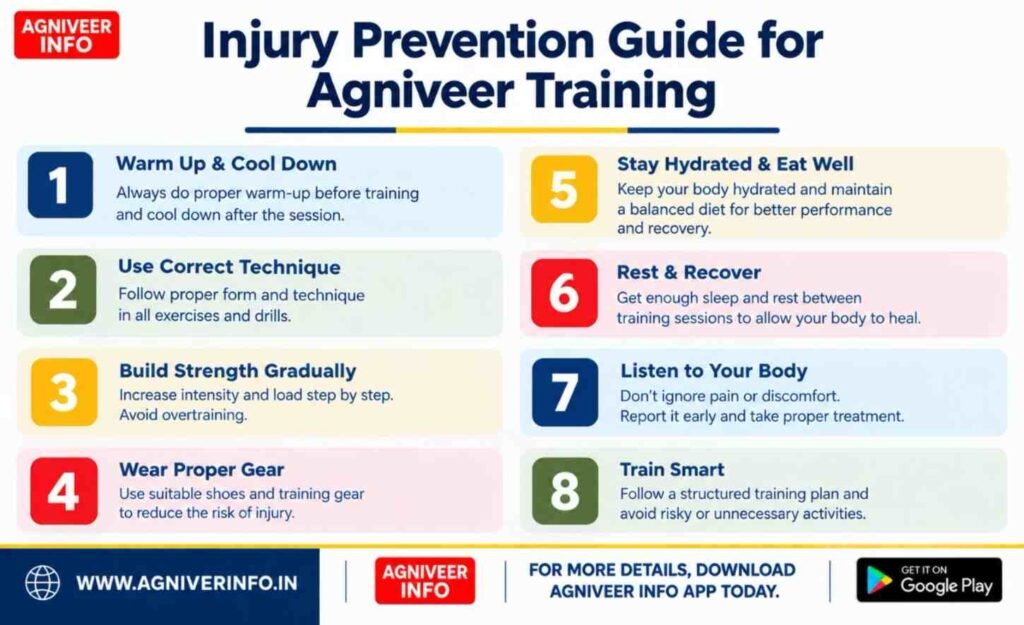
Warm-Up Before Running and Workouts
A good warm-up is the bridge between resting and hard exercise. It does not waste your energy, but raises your body temperature, increases blood flow to the muscles, and helps your joints move better. Candidates should start with easy, steady movement like light jogging or brisk walking so that the heart and lungs get ready slowly.
After this light movement, you should add dynamic mobility exercises, which move your joints through their full range of motion. Exercises like leg swings, walking lunges, and bodyweight squats get the hips, knees, and ankles ready for impact, and running drills like high knees and butt kicks help your nerves and muscles work together for a better stride. Candidates should never jump straight into full-speed sprints when the muscles are cold and stiff. The warm-up should be flexible and should get the body ready without making you tired before the workout even starts.
How to Increase Running Safely
To build your running ability safely, you should follow a clear plan based on your present fitness and not on hard targets that someone else set. Your bones, tendons, and muscles need enough time to get used to the impact of running, so you should raise your workload slowly and keep the weekly increase small.
- Switching between hard days and light or rest days gives your body time to repair itself.
- Beginners get a lot of benefit from walk-run intervals, because they build stamina without putting too much load on the joints.
- You should not run at full effort every day, because running daily often builds up tiredness instead of improving your performance.
- Having a recovery week now and then, when you cut down your total distance for a while, helps your body settle the gains it has made.
- Giving your body time to adapt in the long run prevents early breakdown and keeps your progress steady during your test preparation.
Strength Training for Injury Prevention
Sensible strength training protects your body from the repeated impact of running during Agniveer fitness training. Stronger muscles keep your joints steady, help your body absorb force, and fix the wrong movement habits that come from weak spots. Your training should focus on the main movements that build the muscles you use in running and in the physical tests.
- Lower Body: Squats and lunges build the thigh, back-of-thigh, and hip muscles so that your hips and knees stay steady.
- Lower Legs: Slow, controlled calf raises make your lower legs and Achilles tendons stronger against the many foot strikes in running.
- Core & Upper Body: Push-ups, pull-ups, and core exercises keep your upper body and trunk steady during hard efforts.
When you do the exercises with correct form, raise the weight or difficulty slowly, and take enough rest between sessions, strength work helps your training and does not just tire you out. Strength training makes the body much tougher, but it does not make a candidate completely safe from injury.
Footwear and Training Surface
The shoes you wear and the ground you train on play a big part in how much impact your body takes during Agniveer physical test preparation. Good running shoes should fit comfortably, have enough cushioning, and suit the natural shape of your foot. You should not run in badly worn shoes that have lost their support, because the worn sole passes extra impact straight to the joints of your lower legs. When you start using a new pair, wear them for short runs first so that you do not get blisters or foot pain.
The ground you run on also decides how the impact affects your body. Hard surfaces like concrete or asphalt send a strong force to your bones and joints with every step, so mixing hard road running with softer ground such as dirt paths, grass, or athletic tracks helps reduce the total impact. Candidates should choose shoes that suit their own body and change their running place whenever they can.
Recovery, Sleep and Nutrition
Your body becomes fitter during rest and not during the workout itself. Good recovery lets the body repair the tiny tears in the muscle fibres and fill up the energy it used. Getting seven to nine hours of good sleep every night is very important, because the body does much of its repair work in deep sleep, and planned rest days are just as important to prevent long-term strain on the body.
- Hydration: Drinking water regularly keeps the joints working smoothly, helps the muscles, and keeps the body cool during hard sessions.
- Proteins: Eating enough protein gives your body the building blocks it needs to repair muscles and recover.
- Carbohydrates: Carbohydrates are the main fuel for hard running and strength sessions, and they stop the muscles from getting tired too early.
If you do not support your preparation with enough food and rest, your movement gets worse and your risk of injury goes up a lot.
Warning Signs You Should Not Ignore
- Pain that is sharp or does not go away, gets worse while exercising, or changes the way you normally run.
- Swelling that you can see, or clear tenderness around the bones and joints.
- Being unable to put normal weight on your leg, or being unable to walk without a limp.
- Sharp, sudden pain that comes right away during a fast movement or a sprint.
- Pain that stays even during normal daily activities or wakes you up at night.
- The same problem coming back again and again, session after session.
- Dizziness, feeling lightheaded, chest discomfort, or trouble breathing during exercise.
What to Do When Pain Appears During Training
When you feel pain suddenly during a session, you should first tell the difference between normal tiredness in the muscles and a possible injury to the body’s structure. Pushing through sharp or growing pain does not help, and it often turns a small problem into a long-term injury. If a certain movement causes pain, you should stop that exercise or make it lighter right away and not try to force your way through it.
Testing a painful joint or muscle again and again at full effort to see whether it has healed only irritates the tissue more. If the pain stays, gets worse after rest, or makes normal daily movement hard, you should get checked by a qualified healthcare professional or a physiotherapist. You should go back to full activity slowly, and only after the symptoms are gone, so that your body is ready again before you start hard workouts.
How to Avoid Overtraining During Agniveer Preparation
Overtraining happens when the total amount and hardness of your training keep going beyond what your body can recover from. More training does not always mean better performance, because without a good balance, too much effort actually makes your fitness worse. Candidates should mix hard sessions with easy, low-effort days and full rest days.
It is important to notice the early signs of overtraining so that you can keep progressing over the long run. These signs include muscle soreness that does not go away, a fall in performance that you cannot explain, poor sleep for many days, losing interest in training, a higher heart rate at rest, and more small injuries than before. Agniveer physical preparation should build your fitness step by step over time and not pile up tiredness in your body.
Safe Preparation Before the Agniveer Physical Test
As the date of the official physical test comes closer, candidates should focus on holding on to the fitness they have built and on getting rid of the tiredness that has piled up. If you try a sudden, big jump in training or start new exercises just before the test, your injury risk goes up and your fitness does not improve.
- Cut down your total training amount, but keep a few short, good-quality efforts so that your muscles stay sharp without getting tired.
- In the last weeks, keep a steady sleep time, drink enough water, and eat a balanced diet every day.
- Do not try new shoes, sudden big changes in diet, or unfamiliar workouts just before the test.
- Keep checking the official physical test guidelines so that your preparation matches the current recruitment rules.
- Reaching the test fully rested, fresh, and free from injury gives you the best chance to show what you can really do.
Injury Risk Table
| Injury Risk | Common Cause | Prevention Approach | Important Caution |
| Running Overuse | A sudden jump in daily running distance without slow build-up. | Raise your running distance slowly and keep rest days. | Stop at once if bone pain or shin pain in one spot gets worse. |
| Muscle Strain | Sudden full-speed sprints without a proper warm-up. | Do dynamic warm-ups and build strength step by step. | Do not stretch a badly strained muscle hard. |
| Knee or Ankle Pain | Weak supporting muscles and running again and again while tired. | Strengthen the hips and calves and improve joint movement. | Do not depend on braces to hide pain that is still sharp. |
| Excessive Fatigue | Hard training every day along with poor sleep and diet. | Balance hard and easy days and give importance to sleep and food. | Tiredness that does not go away raises your risk of injury. |
Conclusion
To prepare well for the Agniveer physical selection tests, you need a smart balance between hard work and sensible injury prevention. Raising your workload slowly, building your running step by step, and doing strength training regularly make your body tougher much more than tiring yourself out every day without control. Candidates should understand that recovery, sleep, and balanced food are a real part of training and not a sign of weakness.
When you listen to your body and act early on warning signs, small pains do not grow into serious breaks in your training. If you get an injury that is severe or does not go away, getting a check-up from a medical professional is very important for safe recovery. In the end, these injury prevention habits protect your health and improve the quality of your preparation, but they are basic self-care and not a promise that you will get selected.
Get the latest Agniveer updates by joining our WhatsApp channel.
Frequently Asked Questions
Q1. How can Agniveer candidates reduce running injuries?
A1. Candidates can lower the risk of running injuries by raising their running distance slowly, wearing shoes that give good support, keeping rest days, and building the main muscles of the lower body on a regular basis.
Q2. Should beginners run every day during preparation?
A2. No, beginners should not run every day, because switching running days with rest or light activity gives the muscles and joints time to get used to the load and recover safely.
Q3. Is warming up necessary before Agniveer training?
A3. Yes, warming up is necessary, because it makes the muscles warm, helps the joints move better, increases blood flow, and gets the nerves ready for hard physical effort.
Q4. What should candidates do when persistent pain appears?
A4. When pain does not go away, candidates should reduce or stop the activity that causes it for some time, and then get checked soon by a qualified healthcare professional or a physiotherapist.
Q5. Can strength training help reduce injury risk?
A5. Yes, strength training makes the muscles, tendons, and joints stronger, improves your control over movement, helps the body absorb force, and protects candidates from the repeated hard impact of running.
Q6. How important is recovery during Agniveer preparation?
A6. Recovery is very important because the body becomes fitter during rest, and enough sleep, water, and food let the damaged muscle repair itself and grow stronger.
Q7. Should candidates train through muscle or joint pain?
A7. No, candidates should not train through sharp joint or muscle pain, because pushing through strong pain often turns small tears in the tissue into serious injuries.
Q8. Can injury prevention guarantee success in the Agniveer physical test?
A8. No, injury prevention cannot guarantee success in the test. It improves the quality of your preparation and cuts down avoidable setbacks, but selection depends on your total performance.
READ ALSO: INDIAN ARMY RANK STRUCTURE: A DETAILED GUIDE TO RANKS & INSIGNIA